
"season introduction"
5000 article(s) found

Introduction to the price of Arabica coffee beans during the harvest season
Arabica is deeply loved by Chinese people with a short history of coffee contact because of its strong fruity aroma. it was introduced to China by missionaries in the 19th century and was widely planted in Panzhihua, Sichuan, and the dry-hot valley of the Jinsha River in western Yunnan, where the sunshine was long and there was a big temperature difference between day and night. The local people solved the problem of insufficient seasonal rainfall by diverting water up the mountain.

Introduction to the production process of Malaba Coffee in Rwanda A brief introduction to Chimere Manor
The biggest harvest season for Rwandan coffee is during the main rainy season, from March to the end of May. During the harvest season, farmers spend most of their day picking coffee fruits by hand. In the afternoon, farmers carry coffee fruits in traditional baskets made of banana leaves to a cleaning station a few hours away. The mechanic uses his hands to make the best quality coffee with crimson color.

Kenya Kasawa small Farmers Cooperative Information introduction Kenya AB is not worse than Kenya AA
For professional baristas, please follow the coffee workshop (Wechat cafe_style) Kenya AB Kathakwa in Kenya in 2017, where production continues to decline, raw bean prices soar and there are few winners in 2017! The team was stationed in Kenya for about a week during the main production season at the beginning of the year, continued to test more than 100 batches of samples, and finally selected 12 batches for introduction. This selected AB comes from Casa.

Introduction to the taste treatment method of manor characteristics and flavor description during Kenyan coffee bean picking season
Taste description of the manor during the Kenyan coffee bean picking season the Kenyan government takes the coffee industry very seriously, where it is illegal to cut down or destroy coffee trees. Kenyan coffee buyers are world-class high-quality coffee buyers, and no other country can grow, produce and sell coffee on a continuous basis like Kenya. All the coffee beans are first made by Ken.

Introduction to Colombian Coffee producing areas with Pure, mild and balanced taste
Cauca province is similar to other southwest producing areas, the precipitation shows an obvious unimodal distribution (monomodal), and the dry season mainly occurs from August to September every year, followed by a concentrated coffee blossom season followed by the next year's concentrated coffee harvest season. The biggest difference in climate between Cauca and other producing areas is probably the relatively large temperature difference, with an average daily temperature of 11 ℃ and daytime.

A brief introduction to the treatment method of grinding degree and baking degree of spicy and unrestrained Kenyan boutique coffee beans
Large coffee processing farms in Kenya usually have independent processing facilities. A large number of small farmers usually pick ripe coffee fruits by hand. Coffee picking is a labor-intensive job that requires the whole family to deploy and even hire workers during the harvest season. The fresh fruits of the picked coffee need to be promptly transported to the cooperative-owned coffee processing plant for pulping and transportation.

Introduction of Guatemala Coffee Manor LaTisha Manor Guatemala Cloud Manor
Located in the tropics, there are many volcanoes in the territory, the northern and eastern coastal plains have a tropical rain forest climate, and the southern mountains have a subtropical climate. The year is divided into two dry and wet seasons, with the wet season from May to October and the dry season from November to April of the following year. The annual precipitation is 2000-3000 mm in the northeast and 500-1000 mm in the south. Forests account for half of the country's area and are the best latitude for coffee production.

Introduction to the description of the characteristics and flavor of the producing area of Colombian coffee beans
Traditionally, Colombian coffee is commonly referred to as "Armenia / Medellin". A few years ago, coffee began to be sold under the regional name: Popayan, Bucaramanga, Huila, Tolima, Medellin, Nario. Colombia has two obvious coffee production periods.

A brief introduction to the flavor and aroma characteristics of Kenyan boutique coffee beans
Coffee cultivation in Kenya is mainly divided into two types: large farms (Estate) and cooperatives (Cooperatives). The former generally has a large planting area and has independent coffee processing facilities. Most coffee production is done by a large number of small farmers, who form coffee cooperatives. The Coffee Cooperative Society hired special managers to supervise the coffee handling of its members.

Introduction to the characteristics of Antigua Coffee Flavor Manor in Guatemala with good balance
Guatemala is located in the tropics, the northern and eastern coastal plains have a tropical rain forest climate, the southern mountains have a subtropical climate, the year is divided into two dry and wet seasons, with the wet season from May to October and the dry season from November to April of the following year. The narrow and fertile flatlands on the Pacific side of Guatemala have a tropical climate. The central plateau is also the cultural center of Guatemala, where the year-round temperature ranges from 1300 to 1800 meters.
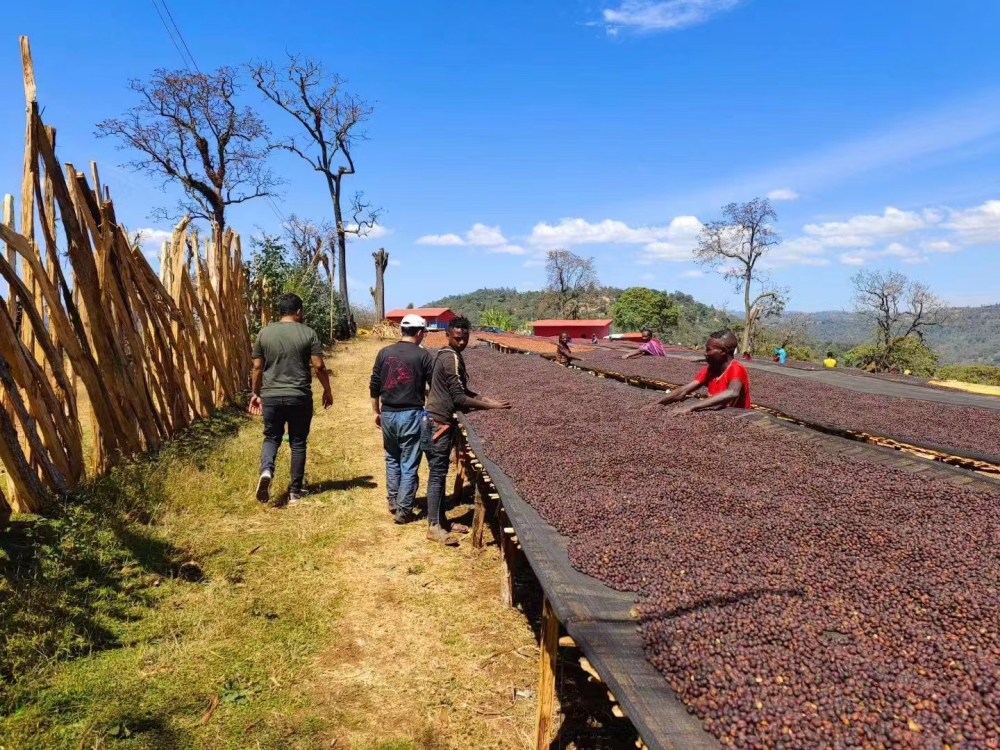
The difference of Flavor and taste between Huakui 6.0 Coffee beans and Huakui 5.0 Coffee beans in the New season introduction of 2022 Huakui Coffee beans
As a famous representative of high-quality coffee beans, Huakui coffee beans are loved by many coffee glutton. Even Luckin Coffee said he would buy 80 tons of Huakui coffee beans in 2022. This quantity is staggering. You know, in 2021, domestic raw bean merchants imported only 30-40 tons of Huakui coffee beans.

Introduction to the Variety characteristics of Brazilian Coffee Bean picking season-planting Environment Flavor description method
Brazilian Coffee Bean picking season-planting Environment Flavor description treatment Variety characteristics A coffee tree's vigorous production period usually lasts about 15 years, of course, some trees are still fruitful for 20 or 30 years. As soon as the coffee tree loses its ability to bear fruit, it will be cut down on the spot and uprooted so as not to compete for nutrients with other trees that are still strong and can bear fruit. Coffee production is related to the types and types of coffee trees

A brief introduction to the cultivation of delicious Kenyan boutique coffee beans, geographical location, climate and altitude
Like the choice of other coffee producing countries, although SL-28 and SL-34 have stood the test of time and cultivated generation after generation of faithful pumps for Kenyan coffee, the Kenyan government and the Coffee Research Institute (Coffee Research Foundation) have begun to promote a new variety, Ruiri 11, for the sake of coffee yield and disease resistance.

Detailed introduction of boutique 90 + coffee, origin of 90 + boutique coffee
Following Cafe Review (Wechat official account vdailycom) found that Beautiful Cafe opened a small shop of its own, 90 + Ninety Plus Coffee, a boutique coffee trader from the United States, its pursuit of ultimate flavor is amazing, so it has been only five or six years since it was established, it has already made the coffee industry all over the world aware of the name. NinetyPlus, literally translated as 90 years, means this family year.

Introduction of Ethiopian Coffee Culture, Coffee Climate cultivation in Ethiopia
Following Kaiping (official Wechat account vdailycom) found that Beautiful Cafe opened a small shop of its own in Ethiopia, which is located between 3 and 14 degrees north latitude, with coffee trees covering an area of nearly 600000 hectares. There are two rainy seasons a year in the south and east of the country, while there is only one rainy season in the west. The distribution of the rainy season is different, so coffee is harvested in Ethiopia all the year round. Coffee grows.

Introduction to Coffee Flavor characteristics of Monte Carmela (Monti Camilla Manor) in Costa Rica
Costa Rica Monte Carmela (Monti Camilla Manor) Honey Costa rica is located in Central America, bordering Nicaragua in the north and Panama in the south. Seven countries in Central America (Belize / Costa Rica / El Salvador / Guatemala / Honduras / Nicaragua / Panama) are coffee producers, of which Guatemala / Costa Rica / Honduras / Honduras is the front of the global coffee exporters.

A brief introduction to the treatment method of grinding degree and baking degree of glossy Kenyan boutique coffee beans
Bourbon Bourbon was first brought to Kenya for planting. In the 1950s, the then agricultural research institution Scott Laboratory selected two excellent hybrids, SL-28 and SL-34, through unremitting efforts, subverting the long-standing prejudice of artificial breeding without excellent natural varieties. SL-28 and SL-34 helped Kenyan Coffee form its own unique
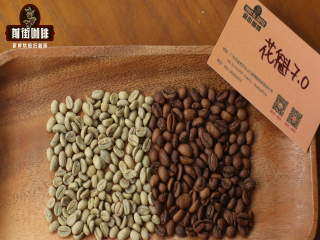
Introduction to the flavor and taste of Xidama Sun Huakui 7.0 Coffee Bean Humbela Sakui Coffee in the new season
Huakui coffee beans have been deeply concerned by domestic coffee practitioners and enthusiasts. The whole coffee circle has been discussed before the new season Sakuran coffee beans arrive in Hong Kong every year. Everyone hopes that the new year's Huakui coffee will still be as sweet as strawberries and smooth as cream. And Sakui 7.0 in the latest season

Introduction of eight different producing areas of coffee beans in Guatemala
The Ekatlago Valley is 2000 meters (6500 feet) above sea level, with dense shade and unique ecology. The nearby Fuego volcano erupts, making its coarse, sandy soil rich in a variety of minerals. Temperate sea breezes from the Pacific and a seasonal climate allow coffee in this region to be dried by sunlight and processed according to traditional family methods that have been accumulated over the years. [special]

A brief introduction to the treatment method of grinding degree and baking degree of fruit-flavored Kenyan fine coffee beans
Bourbon Bourbon was first brought to Kenya for planting. In the 1950s, the then agricultural research institution Scott Laboratory selected two excellent hybrids, SL-28 and SL-34, through unremitting efforts, subverting the long-standing prejudice of artificial breeding without excellent natural varieties. SL-28 and SL-34 helped Kenyan Coffee form its own unique